
Classe 1 Truck Course: Pass with Confidence in 2026
Class 1 truck training is the structured program that prepares you to drive tractor‑trailers safely and meet Quebec’s licensing standards. At 2252 Ch. de Chambly in Le Vieux‑Longueuil, our cours de conduite camion classe 1 blends theory, yard work, and on‑road coaching so you can pass SAAQ exams and start a professional career.
By École de conduite Lauzon Rive‑Sud
Last updated: 2026-06-20
Overview and Table of Contents
This complete guide explains how Class 1 training works in Quebec, what you’ll learn at École de conduite Lauzon Rive‑Sud, and how to pass SAAQ exams with confidence. Use the table of contents to jump to steps, best practices, tools, local tips, and FAQs tailored to Le Vieux‑Longueuil and the Montérégie metro area.
Here’s how to use this guide. Skim the summaries, then dive into the sections that match your next milestone—eligibility, pre‑trip, yard maneuvers, or exam day. Expect clear steps, checklists, and real examples from our training in Longueuil.
- What is a Class 1 truck course?
- Why training matters in Le Vieux‑Longueuil
- How Class 1 training works (step‑by‑step)
- Cours de conduite camion classe 1: core skills
- Types and approaches to learn
- Best practices to pass SAAQ tests
- Tools and resources
- Case studies and examples
- Frequently asked questions
- Conclusion and next steps
What Is a Class 1 Truck Course?
A Class 1 truck course teaches you to operate combination vehicles (tractor‑trailers) and prepares you for Quebec’s knowledge and road tests. It combines classroom theory, yard skills like coupling and backing, and on‑road coaching so you can demonstrate safe, consistent control under SAAQ evaluation standards.
At École de conduite Lauzon Rive‑Sud, the program is built around repeatable systems. You’ll practice a pre‑trip that takes roughly 20–30 minutes, learn four essential backing patterns, and develop smooth shifting with clear RPM targets. Structured repetition builds muscle memory faster than unplanned seat time.
- Quebec context: Class 1 authorizes a tractor with a semi‑trailer (and certain multi‑trailer configurations).
- Learning arc: eligibility check → theory → yard drills → city/highway driving → mock exams → test day.
- Our edge: certified instructors, calm coaching, and a flexible theory calendar tailored to busy schedules.
Ready to map your path? See our dedicated page for the Class 1 truck course to review modules and reserve your spot.
Why Class 1 Training Matters in Le Vieux‑Longueuil
Class 1 training in Le Vieux‑Longueuil and the broader Montérégie region reduces preventable incidents and accelerates job readiness. Local coaching aligns practice routes with neighborhood traffic, winter conditions, and SAAQ test criteria so you build consistent habits where you’ll actually drive.
Heavy‑vehicle drivers share space with commuters, cyclists, and narrow neighborhood streets. A structured course trims risk in three ways: better space management, earlier speed control, and cleaner mirror discipline. You’ll also rehearse winter traction techniques before the first snowfall—critical for confidence.
- Safety impact: Fewer backing surprises when you use fixed reference points and confirm trailer swing every 3–4 seconds.
- Career impact: Completing yard drills and mock exams translates into smoother probation during your first 30–60 days on the job.
- Local fit: Practice includes mixed urban‑highway runs that reflect Montérégie traffic rhythms.
Local considerations for Le Vieux‑Longueuil
- Schedule early during winter months; traction practice and yard time fill up fast near freezing weeks.
- Use quiet windows near Laurier Park for route familiarization before peak hours.
- On study breaks, a brief walk by the Georges‑Dor Public Library helps reset before another theory block.
How Class 1 Training Works (Step‑by‑Step)
The best way to earn a Class 1 license is a clear, repeatable path: orientation, theory, yard skills, on‑road coaching, mock exams, and a coordinated test day. Each phase builds the next so you arrive at the SAAQ center confident and consistent.
Here is the process we follow with Class 1 candidates at our Longueuil location.
| Phase | Your Focus | Outcome You Need |
|---|---|---|
| 1) Orientation | Eligibility, documents, learning plan | Clear roadmap and schedule |
| 2) Theory | Rules, heavy‑vehicle dynamics, hazard perception | Knowledge test readiness |
| 3) Yard skills | Pre‑trip, coupling/uncoupling, straight/offset backing | Repeatable maneuvers under time pressure |
| 4) Cab control | Shifting, mirror scanning, space/speed control | Smooth, predictable vehicle handling |
| 5) On‑road | Urban + highway routes, merges, lane changes | Calm decisions in mixed traffic |
| 6) Mock exams | Timed pre‑trip + full drive rehearsal | Confidence and test pacing |
| 7) Exam day | Checklists, warm‑up, vehicle logistics | Clean pass and license issuance steps |
As you move through phases, we log your progress and close gaps with targeted drills. Most learners benefit from 10–12 structured on‑road sessions plus multiple yard practices. Your plan may flex for prior experience or if winter weather requires extra traction work.
Review module options for our Class 1 training formats and lock in your preferred theory dates via our calendar.
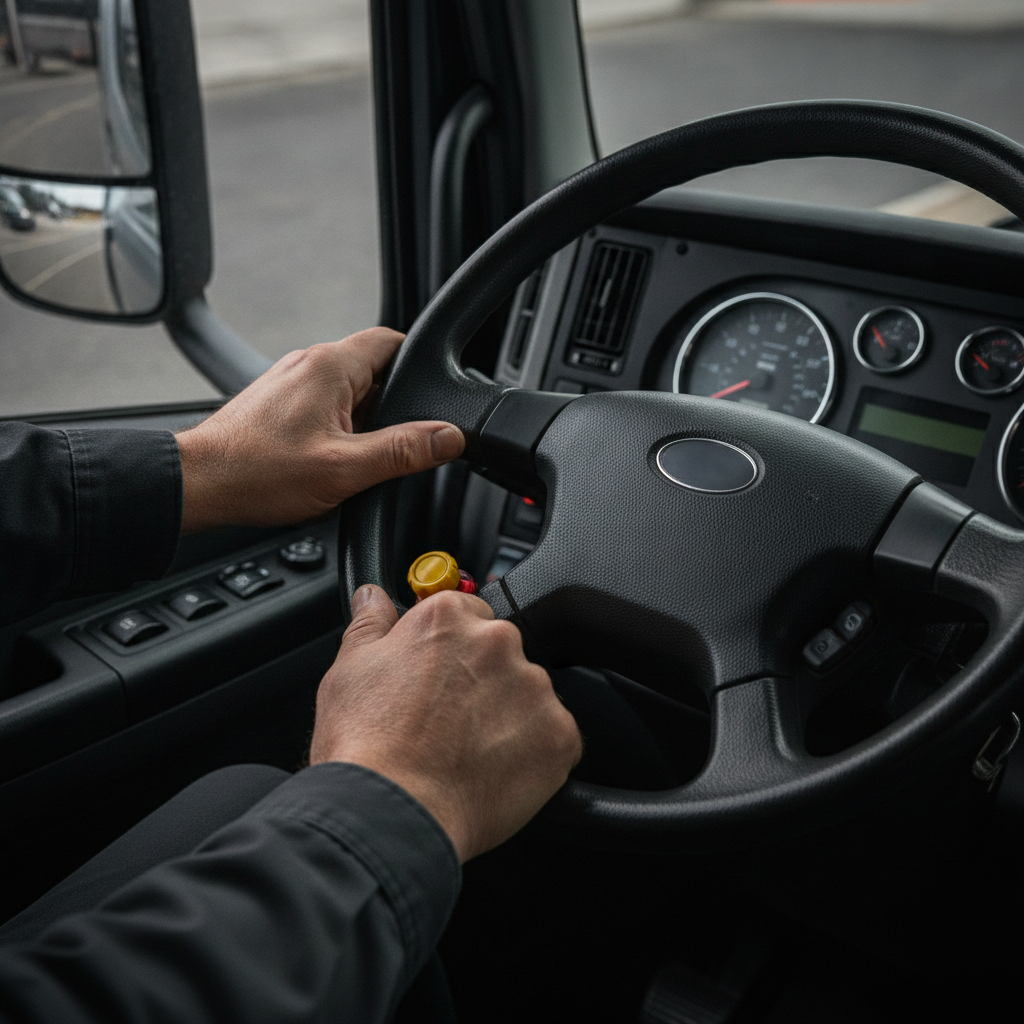
Cours de conduite camion classe 1: What You’ll Master
In a cours de conduite camion classe 1, you’ll master a system for pre‑trip inspection, coupling/uncoupling, four core backing patterns, smooth shifting, defensive space management, and winter traction control. The goal is repeatable execution under pressure, not one‑off luck.
Pre‑trip inspection (20–30 minutes)
- Walk a fixed path: left‑to‑right, top‑to‑bottom, front‑to‑back. Touch and name components.
- Confirm five brake checks: spring brakes, service brakes, trailer brakes, air loss, and warning devices.
- Use a 60–90 second verbal flow per side; examiners value clarity as much as findings.
Coupling and uncoupling
- Align with 2–3 minor steering inputs; stop short, then creep.
- Verify kingpin engagement, do a tug test, and visually confirm lock jaws.
- Raise landing gear evenly; stow lines with zero chafe or pinch points.
Backing fundamentals
- Straight‑line: centerline setup, 5–8 ft offset tolerance, light inputs only.
- Offset: aim for two mirrors’ width, pause every 10–15 feet to reassess.
- Alley dock and 90°: pick fixed yard targets; use GOAL breaks liberally.
Cab control and shifting
- Build a shift map for your transmission (typical split ranges) and rehearse hand/foot timing.
- Keep engine in a steady power band; avoid over‑revving when light or under‑revving on grades.
- Scan mirrors every 5–8 seconds; confirm trailer position after every lane change.
Want a deeper skill breakdown? Explore our advanced Class 1 modules for extra yard time and added winter practice.
Types, Methods, and Approaches to Learn
Successful Class 1 learners mix structured theory, focused yard drills, and progressively complex road routes. Modular plans, winter add‑ons, and mock exams help you personalize training without losing the core sequence needed for SAAQ evaluations.
Learning works best when it’s modular and repeatable. Here are common approaches we use and recommend.
Modular sequencing
- Theory blocks: shorter 60–90 minute sessions prevent overload and improve retention the next day.
- Yard clusters: pair pre‑trip + coupling in one visit; then dedicate another to two backing patterns.
- Route progression: start on wide arterials; add complex merges and lane changes gradually.
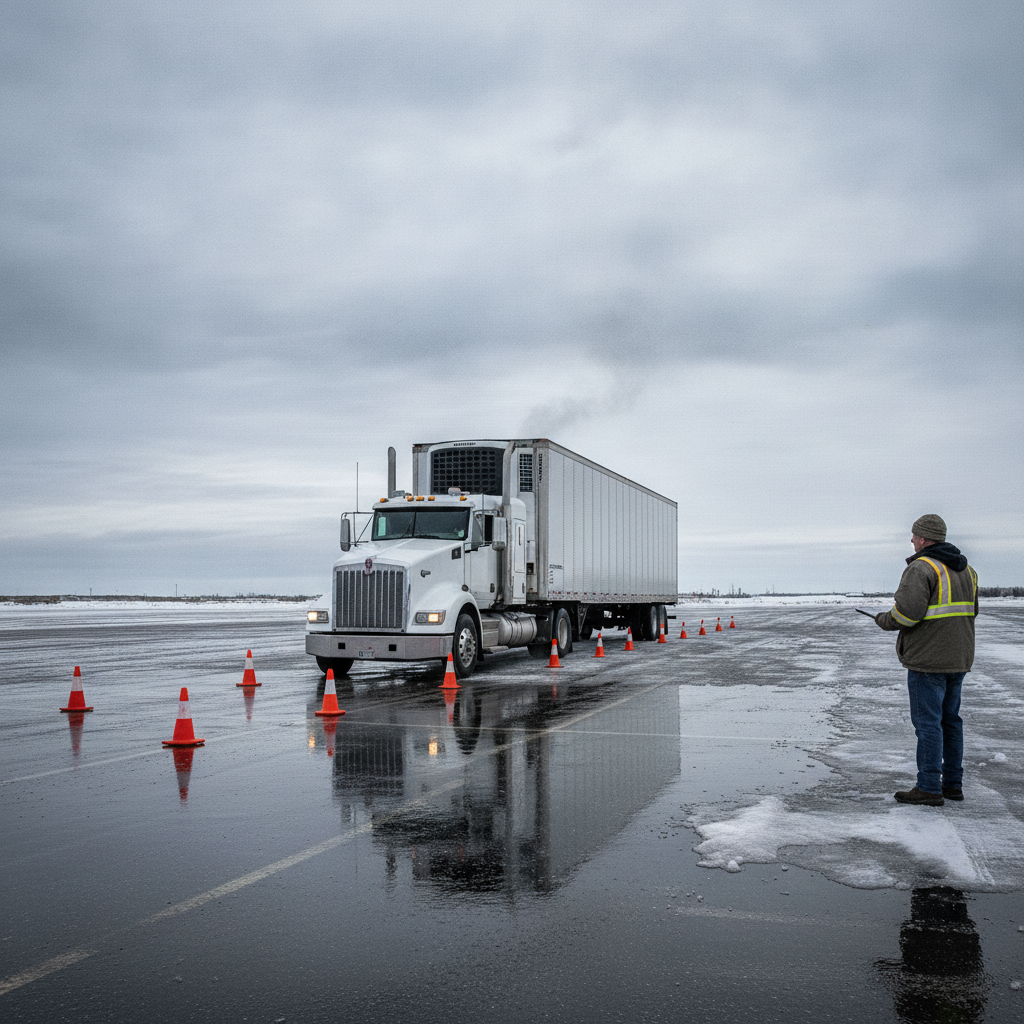
Winter driving add‑on
- Practice traction recovery on low‑grip surfaces; modulate braking to keep steer tires responsive.
- Double your following distance to 6–8 seconds; build stopping earlier at yellow lights.
- Use gentle throttle and keep gear changes minimal on ice to avoid breaking traction.
Mock exam methodology
- Time your pre‑trip and complete without skipping sections; aim for a steady 25 minutes.
- Simulate 45–60 minute test routes, including merges, hill starts, and complex intersections.
- Debrief with video or notes; correct one habit at a time to ensure permanent change.
See package variations on our Class 1 program options and align them with your schedule using our theory calendar.
Best Practices to Pass the SAAQ Knowledge and Road Tests
Tools and Resources
Use a student portal, a clear theory calendar, printed pre‑trip checklists, and short video clips to accelerate learning. Pair them with weekly mock exams and, if helpful, an exam‑day vehicle rental to simplify test logistics.
- Student access: schedules, materials, and messages in one place for fewer mix‑ups.
- Theory calendar: evening and weekend options reduce scheduling friction.
- Winter module: focused traction, braking, and visibility practice.
- Exam‑day vehicle rental: we coordinate pickup and warm‑up so you focus on driving.
- Printable checklists: pre‑trip flow, coupling steps, and backing references.
You can browse our Class 1 resource bundle and align it with your plan. If you’re also considering straight‑truck work, our Class 3 training path is a practical stepping stone before a full tractor‑trailer upgrade.
Case Studies and Examples (Real Training Scenarios)
Real outcomes show the process works: targeted yard reps, modular theory, and mock exams produce steady passes. Here are snapshots from Longueuil learners who followed the plan and earned their Class 1 license without drama.
1) Newcomer from Class 5 to Class 1
- Challenge: nerves around trailer swing and winter braking.
- Plan: double winter module + extra alley‑dock practice.
- Result: clean test drive after two timed mock exams and a 25‑minute pre‑trip rehearsal.
2) Delivery driver upgrading to Class 1
- Challenge: inconsistent offset backing and rushed coupling.
- Plan: three yard sessions focused on reference points and lock‑jaw verification.
- Result: reduced yard time and a confident pass on the first attempt.
3) Career‑switch adult learner
- Challenge: test anxiety and over‑steering in tight alleys.
- Plan: short theory sprints, breathing cues, and slow‑steer drills.
- Result: smooth highway merges and a steady final evaluation.
Curious which plan fits your background? A quick chat with our team will map your fastest path. Start with the Class 1 planning session to personalize your timeline.
Ready for a Calm, Confident Pass?
Book a short assessment, reserve theory dates, and lock your yard sessions now. A clear plan reduces stress and speeds up your first clean pre‑trip, your first flawless backing sequence, and your first confident highway merge.
Our instructors coach with a reassuring, step‑by‑step style. Combine that with flexible scheduling and you’ll feel the difference within your first 2–3 sessions.
Reserve your Class 1 course and we’ll confirm your roadmap within one business day.
Frequently Asked Questions
These quick answers address the questions we hear most from Class 1 candidates in Longueuil. If you don’t see your scenario here, contact our team—we’ll tailor a clear, step‑by‑step plan.
How long does it take to feel road‑test ready?
It depends on your starting point. Many learners feel ready after a full theory sequence, 10–12 structured on‑road sessions, multiple yard practices, and at least two timed mock exams. We adjust plans if winter conditions add traction training.
Do I need an air‑brake endorsement before starting?
No. We integrate air‑brake learning into your plan. You’ll practice air loss checks, warning device verification, and controlled braking so you’re ready for both the knowledge requirements and practical inspections.
Can I rent a vehicle for the SAAQ exam through your school?
Yes. Exam‑day vehicle rental is available. We coordinate timing, pickup, and a short warm‑up so you can focus on your routines rather than logistics. Ask our team to align rental times with your test slot.
What if I’m anxious during backing maneuvers?
We’ll slow it down, use fixed reference points, and add GOAL breaks. Most learners improve quickly by correcting one habit at a time—like hand position or mirror rhythm—then locking in the change with two short, focused reps.
Is Class 3 training a useful step before Class 1?
For many drivers, yes. A straight‑truck license builds air‑brake discipline and urban routing skills. If you prefer a gradual path, we can map Class 3 first, then upgrade to Class 1 using the same yard systems and mock‑exam approach.
Conclusion and Next Steps
A clear, modular plan turns Class 1 licensing from stressful to doable. Reserve your theory dates, rehearse repeatable yard routines, and run mock exams. With calm coaching and flexible scheduling in Le Vieux‑Longueuil, you can pass the SAAQ evaluations confidently.
- Key takeaways:
- Systemize pre‑trip, backing, and mirror rhythms.
- Use modular theory, winter modules, and weekly mocks.
- Personalize your route progression and debrief habits.
- Action steps:
- Book an assessment and reserve your first three sessions.
- Print checklists and schedule one mock per week.
- Confirm your exam‑day vehicle plan in advance.
Train where you’ll drive. Book your Class 1 course in Le Vieux‑Longueuil today and start building confident, professional‑grade habits from your very first session.